
Woven Badges vs Embroidered Badges: What’s the Difference?
Badges play a major role in branding, fashion, and even team spirit. Whether you’re looking to accentuate a uniform or add a personalised touch to a jacket or cap, understanding the nuances between woven and embroidered badges can help you make an informed decision. A few key factors-from design complexity to durability and market trends-can impact your choice considerably.
This guide will walk through the differences using clear, everyday language and real-world examples. Delve into each section to learn how craftsmanship, longevity, and design aesthetics come into play, ensuring you choose the perfect element to match your needs.
Understanding the Basics of Woven and Embroidered Badges
Material and Craftsmanship Details
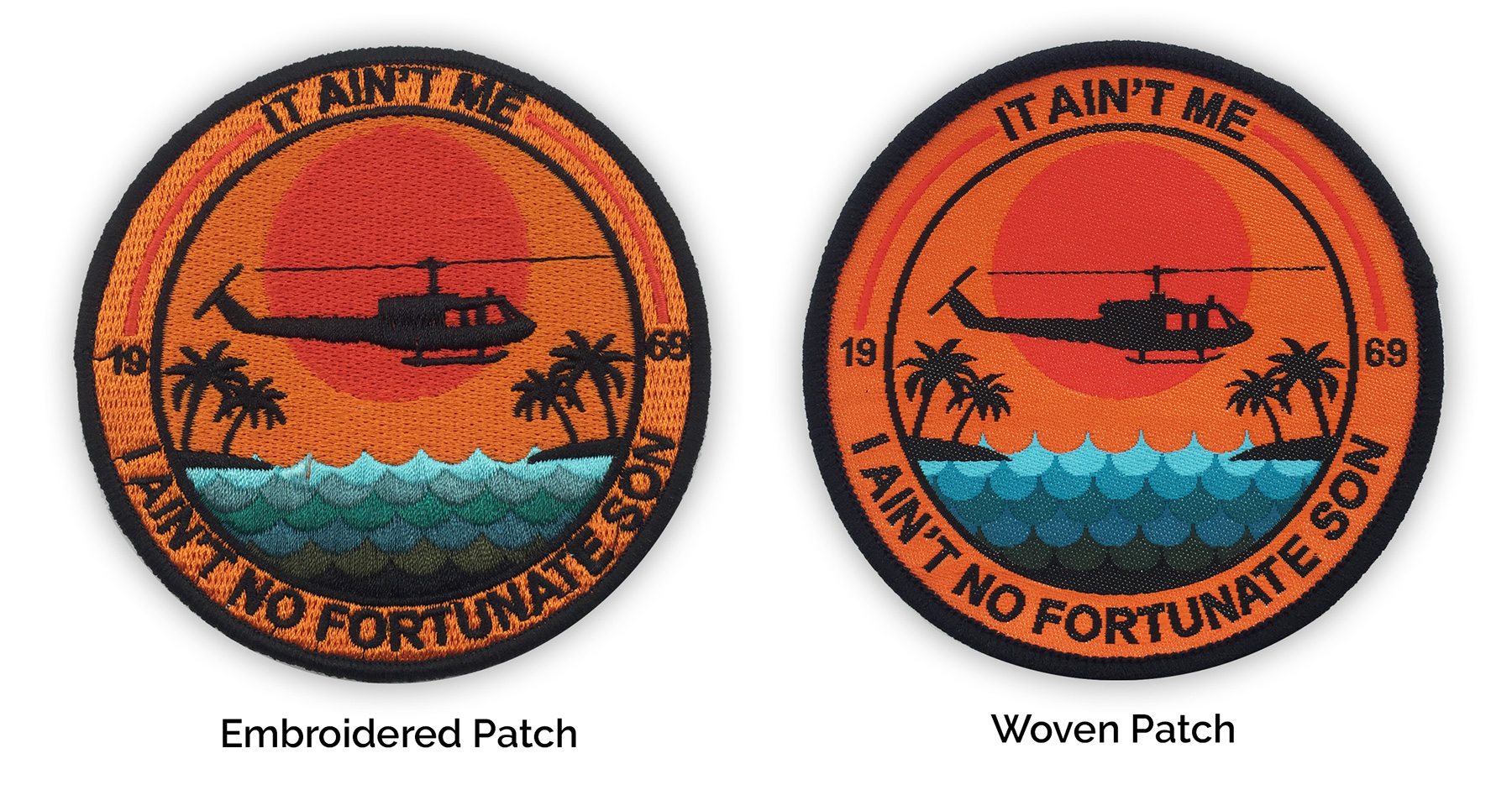
Woven badges are created by interlacing threads, formulating a design that is both intricate and delicate. This method allows designers to achieve fine details, including small text and gradients. In fact, woven badges excel when it comes to precision, which makes them a popular choice in sectors that require visual finesse.
In contrast, embroidered badges are stitched using a machine that lays thick, colourful threads upon fabric. This technique delivers a textured, raised finish that conveys a sense of tradition and durability. The bold look of embroidered badges is especially desirable in applications where a classic, authoritative design is required.
With each method, the chosen materials and techniques reflect the intended use. While woven designs excel in complex digital images, embroidery offers tactile quality and longevity that can resonate strongly with customers.
Design Versatility and Adaptability
The versatility of woven badges means they can capture intricate graphics and tiny details that would otherwise be lost. Designers appreciate this method for its potential to adapt complex logos, gradients, and patterns into a compact design.
Embroidered badges, on the other hand, enhance simpler designs and bold visuals by adding texture and a more pronounced three-dimensional appearance. This tactile element often positions embroidered badges as a choice for sports teams, corporate branding, and other areas where durability and legibility are crucial.
Differences in design adaptability mean that your selection should be dictated by the message you want your badge to convey. A detailed logo may thrive as a woven badge, while a timeless, bold emblem would be perfectly suited to embroidery.
Durability and Longevity
Quality Retention Over Time
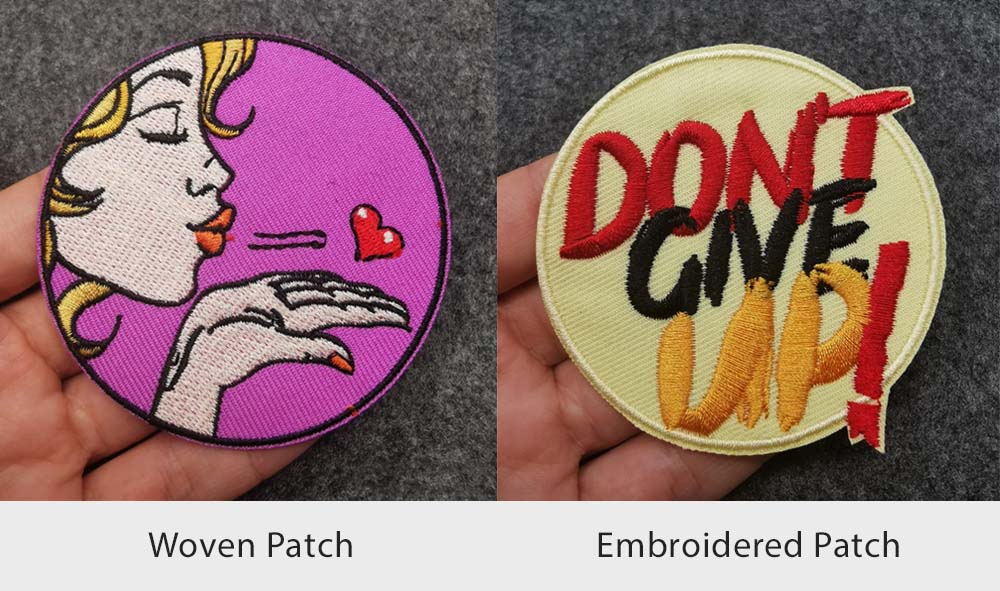
When it comes to durability, embroidered badges have a strong reputation. Studies have shown that embroidered logos retain 94% of their original appearance after 50 industrial washes. This durability makes them ideal for everyday wear, uniforms, and items that undergo frequent cleaning.
The robustness of embroidered patches stands in clear contrast to many screen-printed alternatives, which tend to fade or crack over time. Customers in sectors such as fashion apparel and corporate uniforms value the reliability of embroidery, which enhances brand perception and operational competence.
Although woven badges are praised for their intricate designs, they can sometimes be less resilient when exposed to harsh conditions. It is important to take this into account when the badge is intended for environments where wear and tear are common.
Performance in Various Conditions
The construction of embroidered badges generally provides an edge in extreme conditions. Even with consistent industrial washing, the threads hold up well, preserving clarity and colour vibrancy.
Woven badges are subjected to high-quality craftsmanship that ensures a long lifecycle, though they may be more sensitive to mechanical stress. For example, on garments that are regularly stretched or exposed to abrasive materials, the fine threads might eventually break or display signs of wear.
Consider your target usage environment carefully. If the item sees heavy use and frequent laundering, embroidery is the advisable route. For decorative or more formal applications, the delicate charm of woven badges can more than balance any potential trade-offs in longevity.
Design Complexity and Visual Appeal
Fine Details Versus Bold Statements
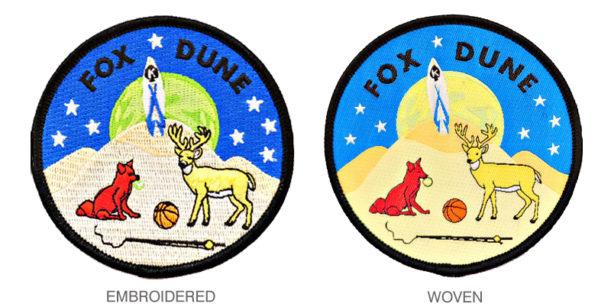
Woven badges truly shine when a design requires detailed intricacies. For those with fine points like subtle gradients or small text, the interlacing threads are capable of capturing those visual subtleties with precision. This is particularly important where the badge serves as a miniature canvas that tells a bigger branding story.
Embroidered badges tend to be better suited for strong, graphic designs that require bold visual statements. The raised, textured finish offers a timeless look, often linked to expertise and operational competence. Customers often associate this technique with reliability and a high standard of production quality.
The visual outcome significantly depends on the inherent nature of each technique-deciding between them might well hinge on what aspects of the design one wishes to highlight. Detailed, customised artwork has a natural home in woven badges, while sturdy, prominent logos flourish as embroidered designs.
Impact on Brand Perception
The perception of quality is a crucial factor. Research indicates that 83% of customers associate embroidered branding with operational competence, a percentage that marks a significant rise over digital printing methods. This elevated customer perception strengthens brand credibility.
While a woven badge might serve as a canvas for innovation, its detailed nature might not convey the robust confidence that an embroidered badge does. This tactile nature often suggests a premium product that can withstand the rigours of daily use without losing its cachet.
Ultimately, the choice between a woven and an embroidered badge can communicate differing brand values. A badge that speaks of tradition, durability, and quality craftsmanship inevitably adds to a brand’s promise and market reliability.
Market Trends and Consumer Preferences
The Rise of Personalisation
Personalisation in fashion and promotional merchandise is gaining immense traction. Recent research shows that personalised patch orders via e-commerce surged by 33% since 2022. Customers enjoy the emotional connection that comes with owning a unique piece.
The demand for custom-made designs is evident as over 60% of consumers actively seek personalised products. Whether it is for a sports team, a corporate uniform, or retail attire, individual expression and uniqueness are at an all-time high.
This surge in customisation signifies a shift towards a more customer-centric market, where each badge tells a personal story. Integrating these trends could enhance your brand’s message and appeal to a broader audience.
Sector-Specific Demand and Market Value
The global woven badges market is valued at approximately $3.5 billion, with a projected CAGR of 7.2% through 2028. This growth is fuelled by diverse applications including corporate branding, sports merchandising, and fashion customisation. The tech-savvy consumer looks for badges that resonate with their personal and professional identities.
In parallel, the strong market presence of embroidered badges is bolstered by their demand in uniformed industries and fashion segments. With fashion apparel and uniforms creating 56% of the market demand for embroidered badges and patches, the effectiveness of embroidery in branding is hard to overlook.
Sector-specific statistics not only reflect the current consumer preference but also predict future trends. Keeping an eye on market developments can help brands stay ahead and make informed choices about which technique best suits their objectives.
Cost Considerations and Production Efficiency
Understanding the Investment
Cost is an inherent part of the decision-making process. Woven badges, with their intricate designs and fine details, often require a higher investment in design and production. When every thread interlocks perfectly, the result is a premium product that speaks of careful craftsmanship.
There are instances, however, where the complexity of the design may outweigh the associated costs. In such cases, high-quality embroidery can provide a balance of affordability and durability, especially when bulk orders are placed, such as for corporate uniforms.
Consider the amount of detail needed and the production scale when budgeting. While bespoke woven designs can elevate a product’s appeal, embroidered badges provide a competitive edge on durability and brand integrity even where the budget is modest.
Production Times and Scalability
The intricate process of weaving a badge usually demands more time and, in some cases, specialised machinery capable of managing fine details. This may not be a challenge for small production runs or high-end custom orders, but it could impact the turnaround time for large-scale projects.
Embroidered badges benefit from streamlined production processes using automated machinery that is both fast and reliable. This efficiency makes them well-suited for bulk orders, as well as situations where a quick turnaround is needed without compromising quality.
Both production methods have their merits, so the choice often depends on balancing the project’s scale, the desired quality of detail, and budget expenditures. Making an informed decision requires weighing these operational aspects against visual and functional objectives.
Practical Applications: When to Choose Which Badge
Corporate Branding and Uniforms
For corporate environments, the traditional look of embroidered badges offers a touch of professionalism that resonates with employees and customers alike. Their durability ensures that even with regular wash cycles, the badge remains sharp and consistent, thus continually reinforcing brand identity.
Corporate applications often demand longevity and a look that inspires confidence. The strong association of embroidered branding with operational competence can provide a subconscious boost to both staff and clients.
On the other hand, woven badges may be selected for internal events or special projects where intricate designs and subtle branding elements are celebrated. Their visual finesse can make them a memorable memento while still representing the brand’s aesthetic values.
Fashion and Personal Style
Fashion outlets and customised apparel benefit from both woven and embroidered badges depending on the design priority. Trend-savvy consumers may lean towards woven badges if the design is intricate and supports a high-fashion statement.
Those in the fashion industry often seek badges that reflect both style and quality. Embroidered badges, with their textured finish, add a vintage yet polished feel, making them perfect for artisanal collections and retro-themed garments.
The choice hinges on the desired outcome: for designs where detail and subtlety hold sway, woven badges offer a refined edge. Conversely, for items where durability is key and a robust aesthetic is needed, embroidery stands out as the ideal option.
Sports Merchandise and Team Uniforms
Sports teams and clubs often favour embroidered badges for their resilience and bold appearance. The intricate stitching ensures that the design remains consistent even after rigorous use, making it perfect for uniforms and merchandise that face constant wear and tear.
Bold badges also play a key role in rallying team spirit. Their defined textures, combined with vivid colours, make them visually striking and easily recognisable during high-energy events or competitions.
While customised woven badges might be used for special edition items or limited merchandise collections, embroidered badges continue to be the go-to for performance and everyday use due to their proven durability and strong market reputation.
Industry Perspectives and Expert Opinions
Expert Advice on Badge Selection
Industry experts suggest that the choice between woven and embroidered badges should be based on the specific needs of the project. For detailed and aesthetically complex logos, woven badges are frequently recommended. Their ability to maintain small text, gradients, and fine details allows a design to shine.
Conversely, when the requirement is for a robust, easily recognisable design that conveys tradition and durability, embroidered badges emerge as the clear winner. The expert consensus stresses that each method comes with distinct advantages, and the success of the final product heavily depends on matching the technique to the design intent.
Advice from leading production specialists emphasises testing samples where possible. Customisation options and technology improvements have blurred the lines between the two, but the intrinsic qualities of each technique remain distinct.
Integrating Modern Trends with Traditional Techniques
The infusion of e-commerce and personalised design has redefined the badge market. Modern consumers expect a level of customisation that traditional methods may not easily deliver, prompting manufacturers to adapt and refine both techniques. Personalisation often means smaller production runs where intricate decisive details are key.
At the same time, modern technology has improved the scalability and efficiency of embroidered badge production without sacrificing the quality that decades of expertise have built. This hybrid approach satisfies discerning clients who demand both tradition and innovation in their branding elements.
The market is evolving, yet the underlying values of durability, quality, and precision remain core. Integrating these modern trends with the best of traditional craftsmanship offers the most robust solution in today’s competitive landscape.
The Future of Badge Production: Trends and Innovations
Technological Advancements and Manufacturing
Cutting-edge machinery and advanced design software continue to drive innovation in both woven and embroidered badge manufacturing. High-resolution digital design capabilities have enabled a level of intricacy previously unattainable, especially in woven badges.
Embroidered badges benefit from automated stitching technology that reduces production time whilst maintaining consistency. This combination of speed and quality is a boon for large-scale operations, particularly in the corporate and fashion sectors.
Looking ahead, consumers can expect even more customised offerings as manufacturers integrate augmented reality previews and improved design software into their production pipelines. These innovations will undoubtedly enhance both the aesthetic and functional qualities of badges.
Market Growth and Consumer Behaviour Shifts
Emerging trends indicate that consumer preferences are leaning towards personalisation. The surge in custom patch orders via e-commerce speaks volumes about this shift. Buyers today seek items that are uniquely tailored, reducing the disconnect between brand and consumer.
The intertwined market growth in both woven and embroidered sectors suggests that innovation is meeting demand head-on. With a global market that is robust and steadily expanding, it is clear that badges will continue to play an influential role in branding, fashion, and beyond.
Shifts in consumer behaviour, alongside technological progress, will ensure that both badge types remain relevant. Designers and brands that keep pace with these trends are likely to harness significant competitive advantages.
Final Thoughts and Considerations
Choosing the Right Badge for Your Needs
The decision between woven and embroidered badges ultimately depends on your specific requirements. Think of the story you wish to tell-does it demand detailed, subtle nuances, or does it call for robust, tactile reliability?
For intricate artwork and small details, woven badges offer a high level of precision and visual sophistication. They are perfectly suited when the design calls for fine tuning and careful adjustments and when the badge serves as a microcosm of your brand’s innovative vision.
On the flip side, if you value endurance with a classic feel, embroidered badges are a tried and tested option. Their durability, combined with the strong association with quality, makes them ideal for applications where the badge needs to withstand day-to-day challenges without compromising its appeal.
Balancing Aesthetics and Functionality
When choosing between these two techniques, it is essential to balance aesthetics with functionality. A badge isn’t just a decorative element-it’s an ambassador for your brand. Whether it graces a uniform, a sports kit, or high-fashion apparel, the badge must resonate with the intended audience.
Embracing modern trends, such as personalised orders through e-commerce, means that functionality and design must go hand in hand. This delicate balance is the cornerstone of effective branding and long-term consumer loyalty.
Both woven and embroidered badges bring unique advantages. Understanding these can help you align your branding strategy with the expectations of your market, be it a corporate, fashion, or sports environment.
Conclusion
Making an Informed Decision
The landscape of badge production is rich with options, each designed to meet specific needs and market trends. Thoughtful consideration of design, durability, market demand, and technological advances can significantly influence your choice between woven and embroidered badges.
Woven badges provide a canvas for intricate designs and fine details, making them perfect for high-resolution digital artwork. In contrast, the tried-and-tested durability and classic appeal of embroidered badges make them the go-to choice for uniforms and corporate branding where longevity remains paramount.
Ultimately, knowing your end use-whether it’s for fashion, promotional materials, or sports-will guide you towards the best option. It’s not merely a case of one being better than the other; it’s about finding the ideal match for your design needs and budget considerations.
Looking Ahead
The future is promising for both woven and embroidered badge technologies. Technological advancements continue to blur the boundaries between fine detail and durable finish. As online customisation platforms surge and the global market for badges remains robust, it is clear that attention to both design and functionality will shape the next wave of branding solutions.
Brands and designers now have the advantage of informed choice-leveraging expert insights and market trends to create badges that are not only visually appealing but also cement brand recognition over time. The right badge, chosen wisely, can create a lasting impression that resonates well beyond a single glance.
Ultimately, whether you choose woven for its precision or embroidered for its timeless strength, a thoughtfully crafted badge represents a commitment to quality, individuality, and lasting brand success.
Click here for more How Custom Acrylic Keychains Are Used in Retail Promotions