How Much Does Emergency Tree Removal Cost in NSW?
What Is Emergency Tree Removal and Why Is It Important in NSW?
Emergency tree removal refers to the immediate extraction of trees that present urgent safety risks to people, property, or infrastructure. This specialized service addresses situations where trees have become structurally compromised and require swift professional intervention to prevent catastrophic outcomes.
The importance of timely action cannot be overstated when dealing with hazardous trees in NSW. A tree leaning precariously over a home or blocking a major access route demands immediate attention—delays can result in:
- Property damage from falling limbs or complete tree collapse
- Personal injury to residents, pedestrians, or motorists
- Infrastructure disruption including damaged power lines, blocked roads, or compromised utility services
- Escalating costs as unstable trees become more dangerous and complex to remove safely
NSW experiences severe weather events including storms, high winds, and flooding that can rapidly transform healthy trees into immediate threats. You can find more information on how to deal with such situations in this storm damage FAQ. A tree that appears stable one moment may become critically dangerous within hours of a storm passing through. Professional arborists responding to these emergencies assess the risk level, secure the area, and execute safe removal procedures before the situation worsens.
The distinction between routine tree removal and emergency situations lies in the urgency factor. While standard tree removal can be scheduled weeks in advance, emergency scenarios require same-day or even immediate response—often outside regular business hours. This urgency directly impacts both the approach taken by arborists and the tree removal cost NSW residents can expect to pay for these critical services.
What Situations Require Immediate Tree Removal in NSW?
In NSW, emergency tree situations need immediate professional help when trees pose a current threat to safety or property. Trees damaged by storms with split trunks, exposed roots, or significant structural damage need urgent removal to avoid collapse.
Storm Damage and Structural Failure
Severe weather events create the most common emergency tree situations across NSW. Trees that have been partially uprooted during storms remain unstable, with root systems no longer providing adequate support. Split or cracked trunks indicate internal structural failure that could lead to sudden collapse without warning. Large branches hanging precariously after high winds create immediate overhead hazards for anyone passing beneath.
Fallen Trees Blocking Critical Access
Trees that have fallen across driveways, roads, or building entrances require immediate removal to restore access. A tree blocking the only exit from a property creates a safety risk, particularly during ongoing weather emergencies when evacuation may become necessary. Fallen trees across public roads pose hazards to motorists and pedestrians, requiring rapid response to prevent accidents.
Trees Threatening Power Infrastructure
Hazardous branches NSW residents must address immediately include those touching or leaning toward power lines. Trees in contact with electrical infrastructure create electrocution risks and potential fire hazards. Even trees leaning heavily toward power lines without current contact require urgent assessment, as the next strong wind could bring branches into the wires. Contact with high-voltage transmission lines demands immediate professional intervention and coordination with energy providers.
Buildings and Structures at Risk
Trees leaning at dangerous angles toward homes, garages, or other structures need emergency removal before gravity completes the fall. Visible signs include:
- Soil lifting on one side of the tree base
- Cracks appearing in the ground around root zones
- Trees leaning more than 15 degrees from vertical
- Recent changes in lean angle after storms
Branches with Imminent Failure Risk
Storm-damaged trees often retain large branches that appear attached but have internal breaks or cracks. These widow makers can fall without warning, creating deadly hazards below. Dead branches over 10 centimeters in diameter hanging above walkways, play areas, or parking spaces require immediate removal. Branches showing fungal growth, hollow sections, or bark separation indicate decay that compromises structural integrity.
How Is the Cost of Emergency Tree Removal Determined in NSW?
Emergency tree removal pricing depends on multiple variables that arborists assess before providing a quote. The final cost reflects the complexity of the job, resources required, and the level of danger involved in the removal process.
Tree Size and Species
Larger trees command higher removal fees due to the increased labor, time, and equipment needed. A small tree under 5 meters might cost $1,172, while a massive eucalyptus exceeding 30 meters can reach $8,200 or more. Dense hardwoods like ironbark require specialized cutting equipment and take longer to process than softer species such as pine or willow.
Tree height directly impacts accessibility challenges. Tall trees need professional climbers or crane operators to safely dismantle branches section by section. Species with extensive root systems or thick trunks also increase the difficulty of complete removal.
Risk Level and Location
Trees positioned near structures, power lines, or public spaces increase the complexity and danger of removal work. Arborists must use precision techniques to prevent collateral damage, which adds to labor costs. A tree leaning over a house requires careful rigging systems and controlled lowering of branches, unlike a tree in an open field.
Proximity to underground utilities like gas lines or water pipes demands extra caution. Professionals may need to hand-dig around root systems rather than using machinery, significantly extending work hours.
Urgency of Response
After-hours callouts, weekend emergencies, and immediate response requests carry premium rates. Standard tree removal during business hours costs substantially less than a midnight emergency following a severe storm. The urgency premium can double or triple base rates due to:
- Crew availability outside regular schedules
- Overtime wages for emergency response teams
- Immediate equipment mobilization costs
- Priority scheduling over non-urgent jobs
Complexity of the Removal Process
Factors affecting cost tree removal include the tree’s condition and surrounding environment. A partially fallen tree tangled in power lines requires coordination with energy providers and specialized safety protocols. Trees with compromised structural integrity need careful assessment to prevent sudden collapse during removal.
Limited access sites where cranes cannot reach force crews to use manual rigging systems and climbing techniques. Properties with narrow driveways, steep slopes, or restricted entry points increase labor intensity
What Can You Expect to Pay for Emergency Tree Removal Services in NSW?
The average emergency tree removal cost NSW typically falls between $1,172 and $8,200, with most homeowners paying around $3,500 for standard emergency interventions. The wide price range tree removal services cover reflects the diverse nature of emergency situations, from a single fallen branch to a massive eucalyptus threatening multiple structures.
How Much Does Emergency Tree Removal Cost in NSW?
The cost of emergency tree removal in NSW depends heavily on when you need the service. Here’s a breakdown of the different scenarios and their associated costs:
- Standard emergency response (within 24 hours): $1,172–$3,500
- After-hours callouts (evenings, weekends): 1.5x to 2x standard rates
- Immediate response (within 2–4 hours): 2x to 3x standard rates
- Storm season peak periods: Additional 20–50% surcharge
For example, a medium-sized tree removal costing $2,000 during regular hours could escalate to $4,000–$6,000 for a midnight emergency callout. The urgency premium compensates arborists for disrupting their schedules, mobilizing crews outside normal hours, and prioritizing your property over scheduled work.
Factors Affecting Emergency Tree Removal Costs
Several factors influence the cost of emergency tree removal services:
- Tree Size: Small trees under 5 meters typically cost $1,172–$2,000 for emergency removal, while large specimens exceeding 15 meters can reach $5,000–$8,200.
- Tree Species: Native eucalyptus trees with dense, heavy wood cost more to process than other species.
- Location Accessibility: Trees near power lines require utility company coordination and specialized insulated equipment, adding $800–$2,000 to base costs. Properties with restricted access forcing manual removal rather than crane use can increase labor costs by 40–60%.
- Urban Sydney locations often command 15–25% higher rates than regional NSW areas due to increased operational costs and tighter working conditions.
Additional Costs for Special Cases
Certain situations may incur additional costs:
- Heritage-listed trees or protected species requiring council permits add $500–$1,500 in administrative costs and specialized handling.
- If you need an after-hours or immediate response during storm season peak periods, expect additional surcharges on top of standard rates.
Understanding these factors can help you anticipate the potential costs involved in emergency tree removal services in NSW.
Who Are the Professionals You Can Rely on for Emergency Tree Removal in NSW?
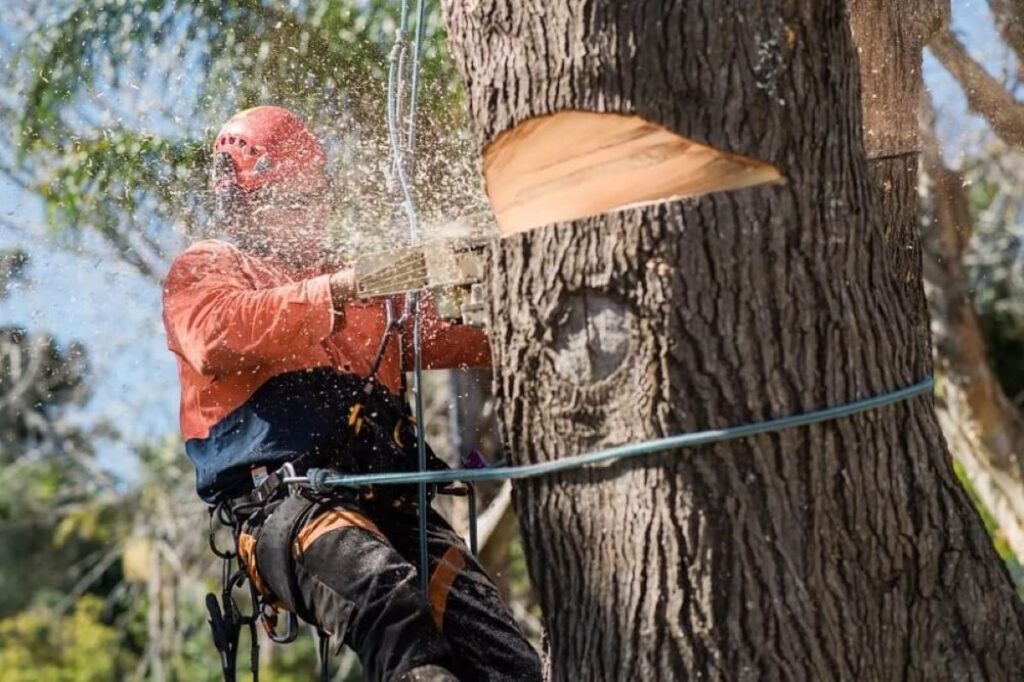
Licensed arborists NSW are the qualified professionals authorized to handle emergency tree situations. These specialists hold certifications from recognized bodies such as the Australian Qualifications Framework (AQF) Level 3 in Arboriculture or higher, demonstrating their expertise in tree biology, risk assessment, and safe removal techniques. Arborists must maintain current insurance coverage including public liability (typically $10-20 million) and workers’ compensation to protect property owners from potential claims.
What Qualifications Should Your Arborist Have?
Reputable professional tree removal services employ arborists with multiple credentials:
- AQF Level 3 Certificate in Arboriculture – minimum qualification for tree work
- Cert IV or Diploma in Arboriculture – advanced training in complex removals
- Chainsaw operation licenses – mandatory for safe equipment use
- Working at Heights certification – required for elevated tree work
- Traffic management qualifications – essential when working near roads
These credentials ensure the arborist understands structural tree mechanics, can identify hazardous conditions accurately, and executes removals without causing additional damage.
What Equipment Do Emergency Tree Removal Teams Use?
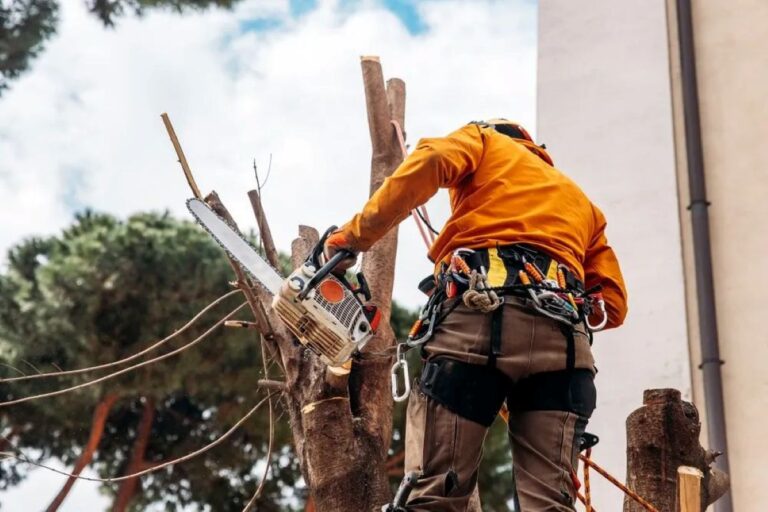
Professional teams arrive with specialized machinery designed for high-risk scenarios. Cranes ranging from 20 to 100 tonnes lift heavy sections away from structures, while elevated work platforms (EWPs) provide stable access to damaged canopies. Arborists use rigging systems with ropes, pulleys, and lowering devices to control branch descent precisely.
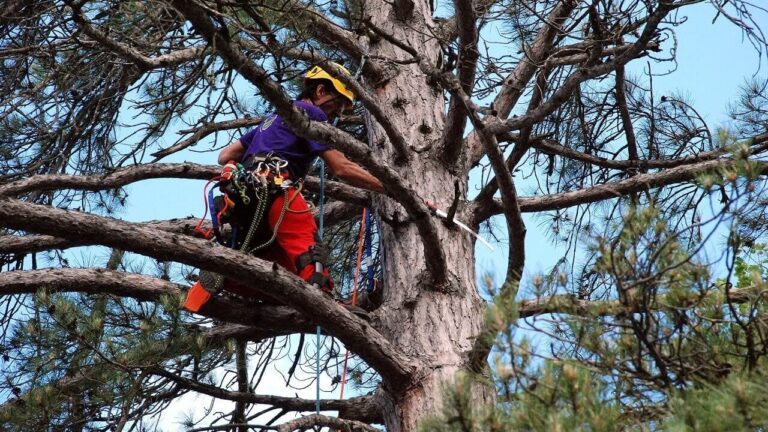
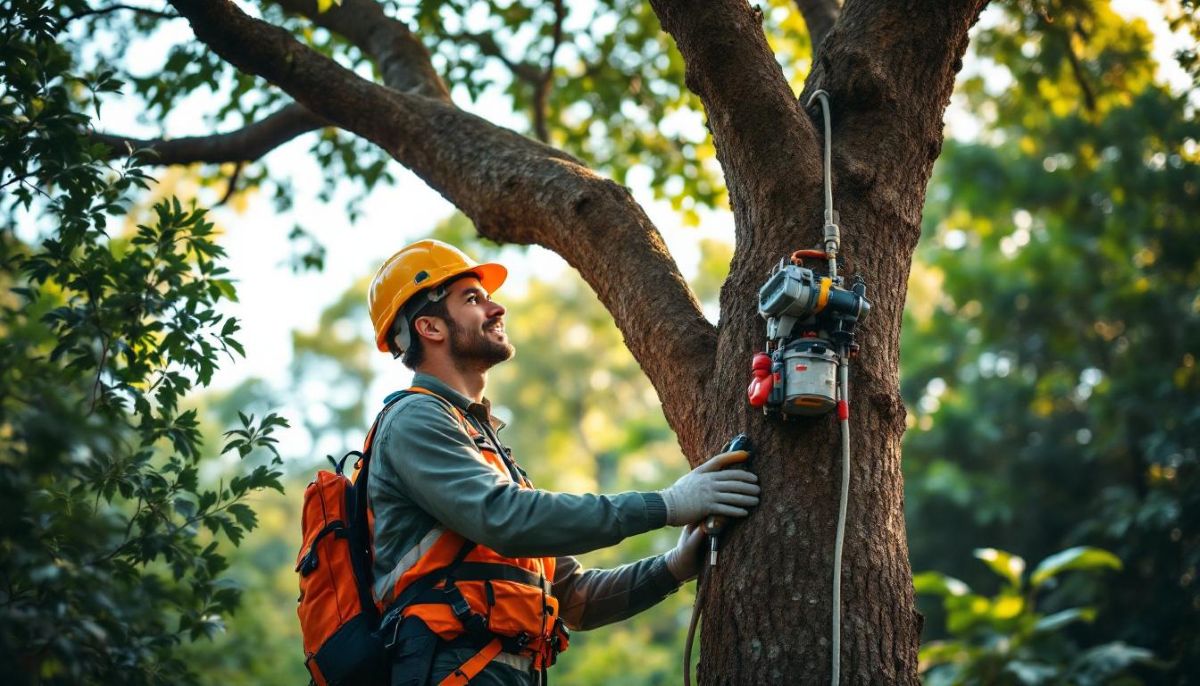
Climbing gear includes harnesses rated to 22kN (kilonewtons), friction hitches for controlled movement, and flip lines for positioning. Chainsaws vary from lightweight top-handle models (25-35cc) for precision cuts to powerful ground saws (60-90cc) for trunk sectioning. Wood chippers process debris on-site, reducing multiple truck loads to manageable volumes.
Are Emergency Services Available Outside Business Hours?
Many established tree companies operate 24/7 emergency response teams specifically for urgent situations. These services maintain on-call rosters with crews ready to deploy within 1-3 hours
What Other Services Can Be Offered Alongside Emergency Tree Removal?
Emergency tree removal rarely happens on its own—most professional arborists offer additional services that address the full extent of storm damage and tree-related risks. These extra services turn a single emergency call into a complete restoration of your property.
1. Trimming and Pruning Damaged Branches
Tree pruning services become essential when storms leave trees partially damaged but still able to be saved. Arborists assess which branches pose ongoing risks and remove them using precise cuts that encourage healthy regrowth. This selective approach costs significantly less than removing the entire tree, usually ranging from $250 to $850 depending on how tall the tree is and how difficult it is to access. Pruning damaged branches also prevents secondary hazards like falling limbs that could cause injury or property damage weeks after the initial storm.
2. Stump Grinding After Removal
Once a dangerous tree has been taken down, the remaining stump creates ongoing problems—tripping hazards, attracting pests, and getting in the way of landscaping or construction. Stump grinding services use specialized machines to grind down stumps below ground level, usually between 15-30 centimeters deep. The cost for this service ranges from $150 for small stumps to $800 for large and complex root systems. Many arborists offer package deals when combining emergency removal with immediate stump grinding, reducing overall costs by 10-20%.
3. Storm Damage Assessment
Professional storm damage assessment provides property owners with detailed reports on the health of all trees on their property after severe weather events. Qualified arborists inspect:
- How strong the remaining trees are
- Any hidden damage to root systems caused by saturated soil
- Compromised branches that may fail in future storms
- Prioritizing ranking for any necessary repairs
These assessments typically cost between $200-$500 but can prevent future emergencies by identifying problems before they get worse. Insurance companies often require documented assessments when processing claims related to storms.
4. Complete Site Cleanup
Site cleanup restores a property covered in debris back to a usable condition after emergency tree work. This service includes removing all wood chips, branches, leaves, and other materials from the property. Professional teams use wood chippers to process smaller branches on-site, haul away larger sections of timber, and rake clean affected areas. The costs for cleanup vary based on
Does Home Insurance Typically Cover the Costs Associated with Emergency Tree Removal in NSW?
Most home insurance policies in NSW provide coverage for emergency tree removal when the damage stems from natural disasters or severe weather events. Standard policies typically cover removal costs up to $1,000 per tree, though this limit varies between insurers and policy types. Click here to get more about home insurance.
What Situations Trigger Home Insurance Tree Removal Coverage NSW?
Insurance claims for emergency tree removal become valid when trees fall due to covered events like storms, cyclones, floods, or bushfires. The tree must have caused damage to an insured structure—such as your home, garage, or fence—or pose an immediate threat to these structures. Policies generally cover the cost of removing the tree from the damaged property and making the area safe.
What Exclusions Apply to Emergency Tree Removal Coverage?
Insurance policies exclude several scenarios from coverage:
- Trees that fall due to poor maintenance or neglect
- Removal of trees that haven’t damaged insured structures
- Trees that fall on uninsured areas like gardens or lawns without threatening buildings
- Pre-existing damage or trees identified as hazardous before the incident
- Gradual deterioration or disease-related tree failures
How Much Does Emergency Tree Removal Cost in NSW Compared to Insurance Limits?
The standard $1,000 coverage limit often falls short of actual emergency removal costs, which range from $1,172 to $8,200. Property owners may face significant out-of-pocket expenses when:
- Multiple trees require removal after a single storm event
- The tree is exceptionally large or difficult to access
- Emergency after-hours service doubles or triples standard rates
- Additional services like stump grinding exceed the base removal cost
What Documentation Do Insurers Require for Tree Removal Claims?
Successful insurance claims for emergency tree removal require comprehensive documentation. A useful resource for understanding the necessary steps and documentation for making insurance claims includes:
- Photographs of the damage before any work begins
- Written quotes from licensed arborists
- Evidence linking the tree damage to a covered weather event
- Receipts and invoices for all removal work completed
- Professional reports detailing the emergency nature of the situation
Can You Upgrade Your Coverage for Better Tree Removal Protection?
Many insurers offer optional add-ons or higher-tier policies that increase tree removal limits beyond
When Should Property Owners Seek Assistance from the State Emergency Service (SES) Regarding Trees?
Property owners should contact the SES emergency tree assistance NSW when trees pose immediate threats to power lines or create life-threatening situations. The SES provides free intervention specifically for safety-critical scenarios where trees have fallen on or are dangerously close to electrical infrastructure.
When to call the SES:
- Trees touching or leaning against power lines
- Fallen trees blocking emergency vehicle access during storms
- Trees that have damaged electrical infrastructure during severe weather events
- Immediate safety hazards during declared emergency situations
The SES focuses exclusively on power line safety trees and making hazardous situations safe enough for utility companies to complete repairs. Their crews will secure the area and remove immediate dangers but won’t handle complete tree removal or property cleanup.
What the SES does NOT cover:
- Debris removal or complete tree dismantling
- Non-urgent tree hazards that don’t involve power lines
- Trees that have already fallen without creating immediate danger
- Routine tree maintenance or preventative removals
- Stump grinding or site restoration
Property owners dealing with fallen trees that don’t threaten power lines or create immediate safety risks need to engage private arborists. The SES operates under strict protocols during emergency declarations, prioritizing life-threatening situations over property damage concerns.
For trees near power lines that haven’t fallen but appear unstable, contact your local electricity distributor first. They can assess whether the situation requires SES intervention or if scheduled maintenance by utility contractors is more appropriate. Never attempt to remove trees near power lines yourself—electricity can arc through branches and cause fatal injuries even without direct contact. Click here to get more about what’s included in a comprehensive arborist report Sydney?
How Can Property Owners Reduce the Need for Emergency Tree Removal?
Proactive tree maintenance strategies significantly reduce the likelihood of emergency situations. Regular inspections by qualified arborists identify structural weaknesses, disease, and decay before they become critical hazards.
Why Does Regular Pruning Prevent Emergency Situations?
Annual pruning benefits extend far beyond aesthetics. Scheduled pruning removes dead or dying branches that could fall during storms, improves tree structure to withstand high winds, and reduces weight on weak limbs. Trees inspected and pruned annually are 60-70% less likely to require emergency intervention.
Property owners who invest $300-$800 in routine maintenance avoid the $1,172 to $8,200 costs associated with emergency scenarios.
What Are Your Responsibilities for Trees on Your Property?
Property owners bear full responsibility for:
- All trees growing entirely within their property boundaries
- 50% responsibility for boundary trees shared with neighbors
- Maintaining trees to prevent hazards to public infrastructure
- Regular inspection and maintenance of all privately-owned trees
Neglecting these duties can result in liability for damage caused by unmaintained trees.
When Does Council Handle Tree Management?
Councils manage trees located on:
- Public roads and footpaths
- Parks and recreational areas
- Nature strips and public reserves
Contact your local council if a tree on public land appears dangerous. They conduct assessments and arrange removal when necessary at no cost to residents.
What Should a Proactive Maintenance Schedule Include?
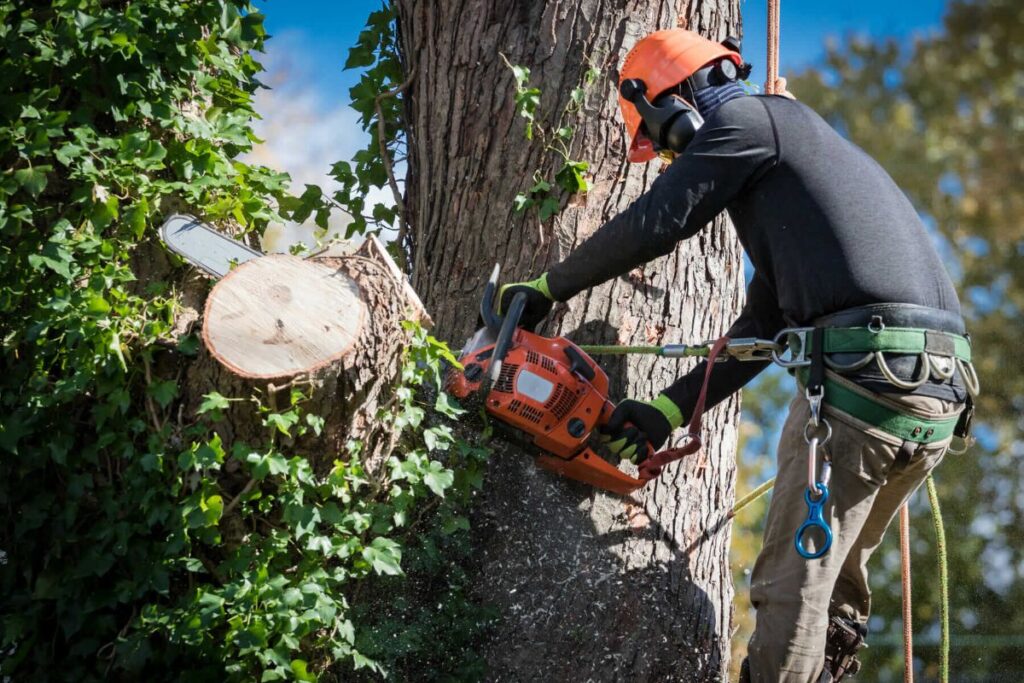
An effective prevention program includes:
- Annual professional inspections to assess tree health and stability
- Seasonal pruning to remove weak or overextended branches
- Post-storm assessments to identify new damage
- Soil testing and fertilization to maintain tree vigor
- Documentation of all maintenance activities for insurance purposes
Trees showing signs of disease, pest infestation, or structural compromise require immediate professional evaluation rather than waiting for scheduled maintenance.