
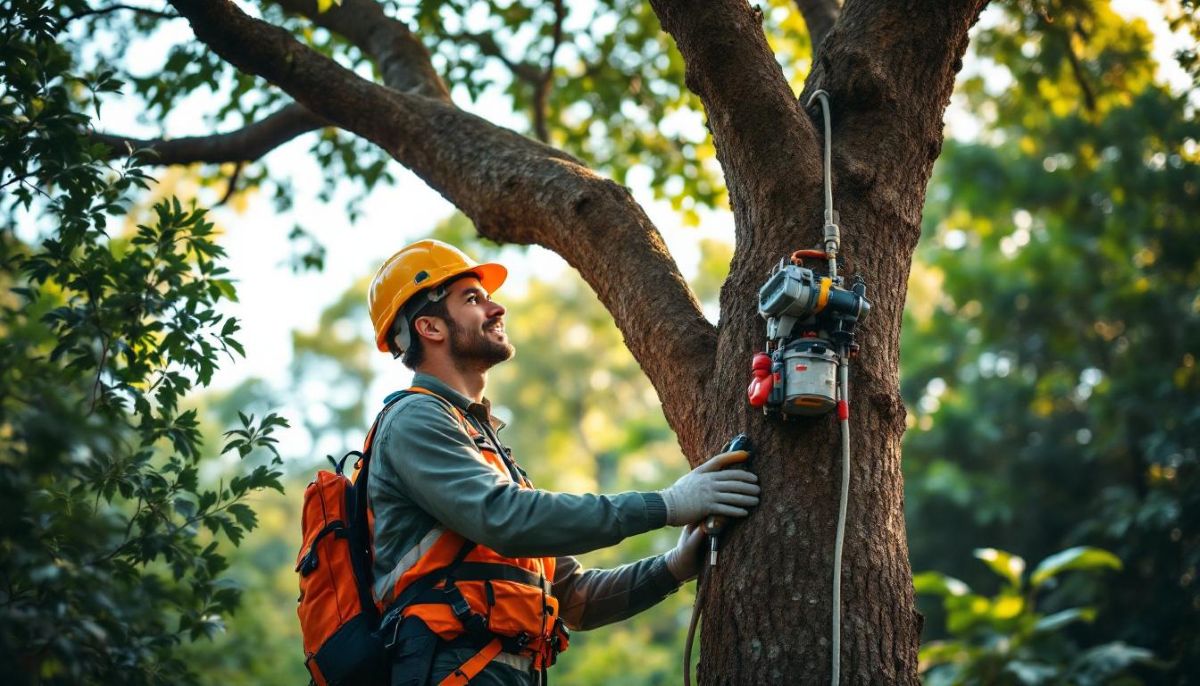
What Is Emergency Tree Removal and Why Is It Important in NSW? Emergency tree removal refers to the immediate extraction of trees that present urgent safety risks to people, property, or infrastructure. This specialized service addresses situations where trees have become structurally compromised and require swift professional intervention to prevent catastrophic outcomes. The importance of timely action cannot be overstated when dealing with hazardous trees in NSW. A tree leaning precariously over a home or blocking a major access route demands immediate attention—delays can result in: NSW experiences severe weather events including storms, high winds, and flooding that can rapidly transform healthy trees into immediate threats. You can find more information on how to deal with such situations in this storm damage FAQ. A tree that appears stable one moment may become critically dangerous within hours of a storm passing through. Professional arborists responding to these emergencies assess the risk level, secure the area, and execute safe removal procedures before the situation worsens. The distinction between routine tree removal and emergency situations lies in the urgency factor. While standard tree removal can be scheduled weeks in advance, emergency scenarios require same-day or even immediate response—often outside regular business hours. This urgency directly impacts both the approach taken by arborists and the tree removal cost NSW residents can expect to pay for these critical services. What Situations Require Immediate Tree Removal in NSW? In NSW, emergency tree situations need immediate professional help when trees pose a current threat to safety or property. Trees damaged by storms with split trunks, exposed roots, or significant structural damage need urgent removal to avoid collapse. Storm Damage and Structural Failure Severe weather events create the most common emergency tree situations across NSW. Trees that have been partially uprooted during storms remain unstable, with root systems no longer providing adequate support. Split or cracked trunks indicate internal structural failure that could lead to sudden collapse without warning. Large branches hanging precariously after high winds create immediate overhead hazards for anyone passing beneath. Fallen Trees Blocking Critical Access Trees that have fallen across driveways, roads, or building entrances require immediate removal to restore access. A tree blocking the only exit from a property creates a safety risk, particularly during ongoing weather emergencies when evacuation may become necessary. Fallen trees across public roads pose hazards to motorists and pedestrians, requiring rapid response to prevent accidents. Trees Threatening Power Infrastructure Hazardous branches NSW residents must address immediately include those touching or leaning toward power lines. Trees in contact with electrical infrastructure create electrocution risks and potential fire hazards. Even trees leaning heavily toward power lines without current contact require urgent assessment, as the next strong wind could bring branches into the wires. Contact with high-voltage transmission lines demands immediate professional intervention and coordination with energy providers. Buildings and Structures at Risk Trees leaning at dangerous angles toward homes, garages, or other structures need emergency removal before gravity completes the fall. Visible signs include: Branches with Imminent Failure Risk Storm-damaged trees often retain large branches that appear attached but have internal breaks or cracks. These widow makers can fall without warning, creating deadly hazards below. Dead branches over 10 centimeters in diameter hanging above walkways, play areas, or parking spaces require immediate removal. Branches showing fungal growth, hollow sections, or bark separation indicate decay that compromises structural integrity. How Is the Cost of Emergency Tree Removal Determined in NSW? Emergency tree removal pricing depends on multiple variables that arborists assess before providing a quote. The final cost reflects the complexity of the job, resources required, and the level of danger involved in the removal process. Tree Size and Species Larger trees command higher removal fees due to the increased labor, time, and equipment needed. A small tree under 5 meters might cost $1,172, while a massive eucalyptus exceeding 30 meters can reach $8,200 or more. Dense hardwoods like ironbark require specialized cutting equipment and take longer to process than softer species such as pine or willow. Tree height directly impacts accessibility challenges. Tall trees need professional climbers or crane operators to safely dismantle branches section by section. Species with extensive root systems or thick trunks also increase the difficulty of complete removal. Risk Level and Location Trees positioned near structures, power lines, or public spaces increase the complexity and danger of removal work. Arborists must use precision techniques to prevent collateral damage, which adds to labor costs. A tree leaning over a house requires careful rigging systems and controlled lowering of branches, unlike a tree in an open field. Proximity to underground utilities like gas lines or water pipes demands extra caution. Professionals may need to hand-dig around root systems rather than using machinery, significantly extending work hours. Urgency of Response After-hours callouts, weekend emergencies, and immediate response requests carry premium rates. Standard tree removal during business hours costs substantially less than a midnight emergency following a severe storm. The urgency premium can double or triple base rates due to: Complexity of the Removal Process Factors affecting cost tree removal include the tree’s condition and surrounding environment. A partially fallen tree tangled in power lines requires coordination with energy providers and specialized safety protocols. Trees with compromised structural integrity need careful assessment to prevent sudden collapse during removal. Limited access sites where cranes cannot reach force crews to use manual rigging systems and climbing techniques. Properties with narrow driveways, steep slopes, or restricted entry points increase labor intensity What Can You Expect to Pay for Emergency Tree Removal Services in NSW? The average emergency tree removal cost NSW typically falls between $1,172 and $8,200, with most homeowners paying around $3,500 for standard emergency interventions. The wide price range tree removal services cover reflects the diverse nature of emergency situations, from a single fallen branch to a massive eucalyptus threatening multiple structures. How Much Does Emergency Tree Removal Cost in NSW? The cost of emergency tree removal in NSW depends heavily on when you need the service. Here’s a breakdown…
