
Wedding Bouquet Flowers: Choosing the One You Will Hold All Day
The bouquet is the most photographed floral item of any wedding, held for three to five hours, carried down an aisle, and handed to a bridesmaid during every group shot. It is also the item most couples choose from a single saved image.
Wedding bouquet flowers deserve better than that, because the decisions involved are genuinely specific: shape, scale, variety, scent, weight and mechanics all change the result.
The bouquet shapes
Hand-tied round. Stems spiralled and tied at one point, creating a full domed shape. Classic, flattering, and the most common choice.
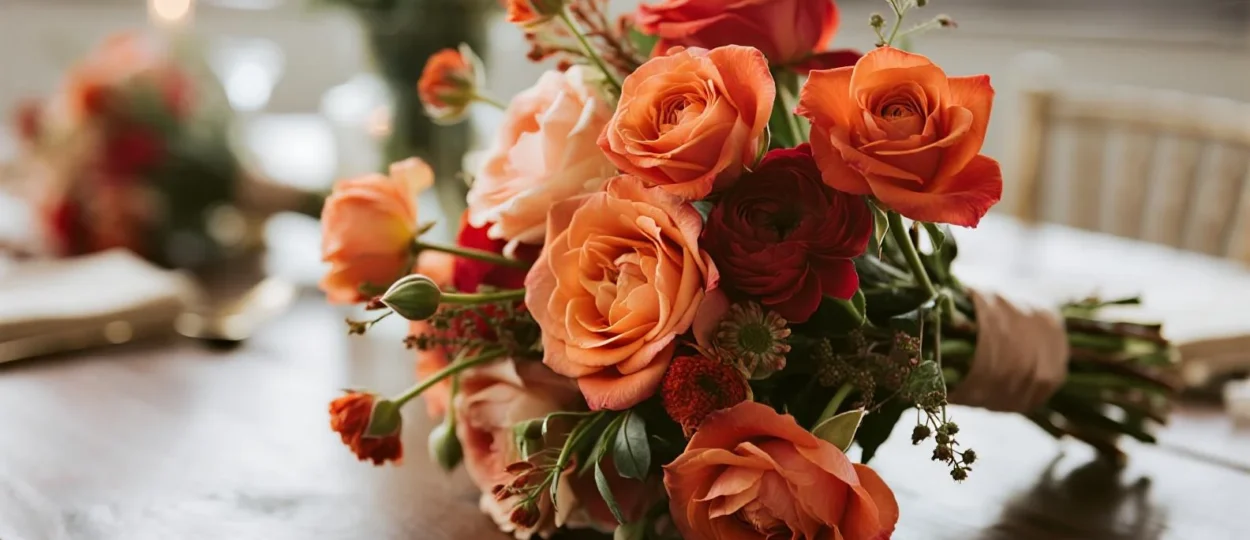
Loose garden style. Asymmetric, textural, varied heights with some trailing elements. Looks effortlessly gathered and takes the most skill to execute.
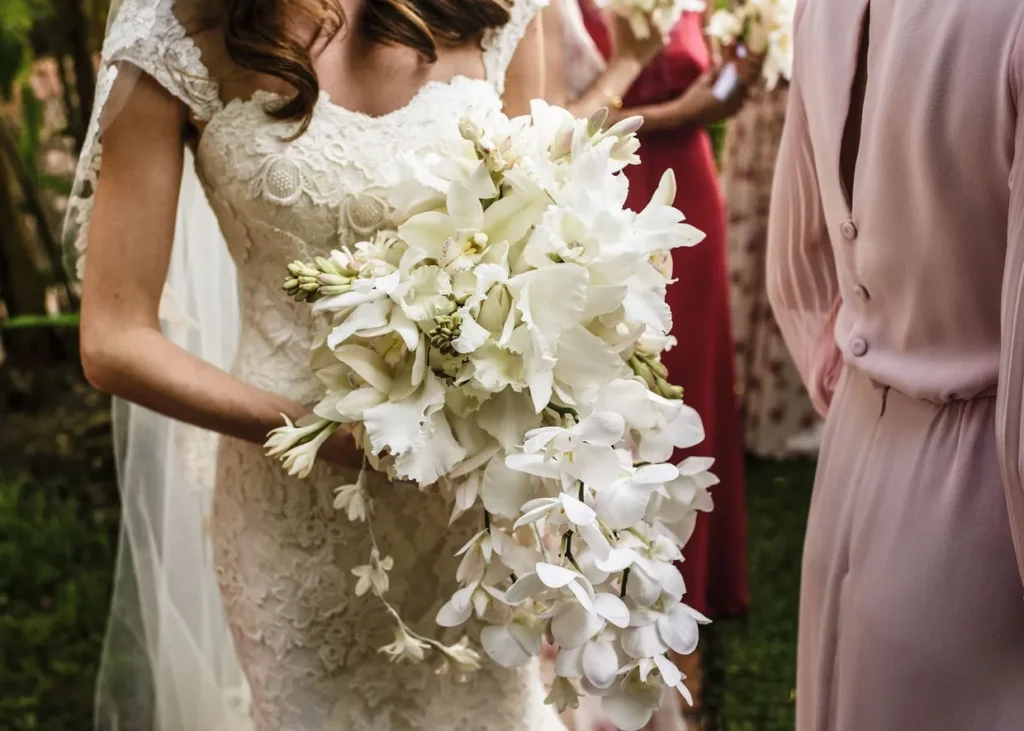
Cascade or teardrop. Flows downward from the hands. Traditional, dramatic, and back in fashion. Usually wired, so more expensive.
Posy. Small, tight and round. Excellent for bridesmaids, flower girls, and anyone who dislikes holding something large.
Single variety. Thirty tulips, or twenty white roses, or a bunch of dahlias. Modern, confident, often cheaper than mixed.
Single stem. One dramatic bloom, such as a king protea or a large peony. Striking and minimal.
Pocket or armful. Long stems carried in the crook of the arm. Relaxed and unfussy, best for outdoor and garden weddings.
Hoop or basket. Alternatives usually reserved for flower girls.
Matching the bouquet to the dress
This is the rule most couples miss. The bouquet should balance the dress, not compete with it.
- Fitted or column gowns: slim, elongated bouquets. Avoid wide round shapes that break the silhouette.
- Ballgowns: larger round or loose bouquets. A small posy disappears against volume.
- A-line: the most forgiving. Almost any shape works.
- Heavily detailed or beaded gowns: keep wedding bouquet flowers simpler and more tonal so the dress leads.
- Simple slip or crepe gowns: this is where a dramatic textural bouquet shines.
- Suits and separates: a compact structured bouquet or a substantial buttonhole-style posy.
Also consider height. A bouquet should sit at the natural waist or just below, not be clutched at the chest. Ask your florist for a handle length that allows that.
Best varieties for bouquets
Focal flowers: garden roses, peonies, dahlias, hydrangea, king protea, waratah, oriental lily, ranunculus at scale.
Secondary flowers: lisianthus, spray roses, tulips, alstroemeria, carnations, chrysanthemum, stock.
Texture: astrantia, wax flower, thryptomene, scabiosa pods, berries, grasses, kangaroo paw.
Trailing: amaranthus, jasmine, smilax, clematis, trailing eucalyptus.
Foliage: eucalyptus varieties, olive, magnolia leaf, ruscus, ferns.
Scent: the underrated decision
Scent is the sense most strongly tied to memory, and a bouquet held close to your face all day is a serious opportunity. If fragrance matters to you, ask specifically for scented varieties.
The most fragrant options are garden roses, sweet pea, freesia, stock, jasmine, lily of the valley, gardenia and boronia. Note that many commercial roses have been bred for vase life rather than perfume, so you need to ask by variety rather than just asking for roses.
Be cautious with heavily scented lilies and gardenia if anyone in the party has sensitivities, and remember that scent intensifies in a warm car.
Weight and mechanics
A large wired cascade can weigh two to three kilograms. That is a lot to hold through a ceremony and a hundred photographs.
Ask about weight at the consultation. Ask whether the handle is wrapped and comfortable, whether it will leak water onto your dress, and whether there are any pins or wires that could catch fabric. Good florists finish handles carefully for exactly this reason.
Hydrated mechanics matter too. For a summer Sydney wedding, the bouquet should stay in water until the last possible moment.
Sydney seasonality
Spring: ranunculus, tulips, sweet pea, boronia, waratah, peonies in a short late window.
Summer: hydrangea, dahlias, celosia, tropicals, grasses. Heat tolerance becomes the priority.
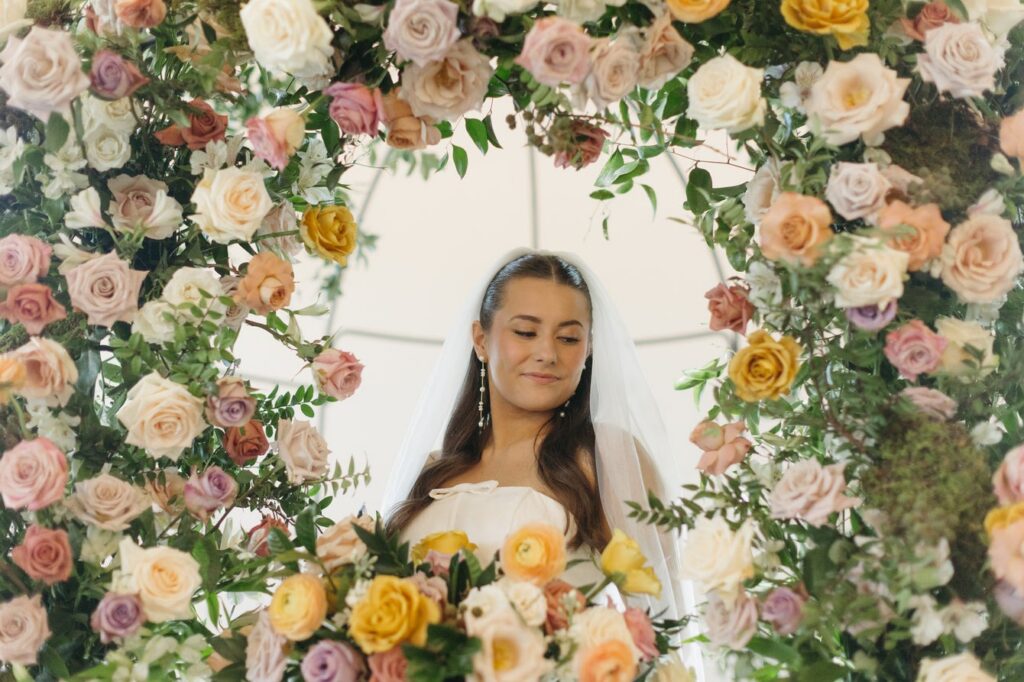
Autumn: garden roses at their peak, dahlias, berries, lisianthus. The richest palette of the year.
Winter: camellia, hellebore, jonquil, tulips, banksia, wattle.
Out-of-season wedding bouquet flowers are available, but imported stems cost far more and arrive with less vase life. A good florist can usually offer a seasonal alternative that reads almost identically in photographs, such as a double lisianthus or a garden rose in place of a peony.
That availability constraint is biological, not commercial. Plant physiology and horticulture programs such as plant science and botany at the University of New England cover the growth cycles, genetics and physiology that determine when a species flowers, which is exactly why your florist cannot conjure peonies in March.
Sydney pricing
- Simple posy: $150 to $250
- Standard hand-tied: $250 to $400
- Large loose garden style: $400 to $600
- Wired cascade: $450 to $800
- Bridesmaid bouquets: $90 to $220 each
If your budget is tight, this is the last item to cut. It is in more photographs than anything else you will buy.
Practical timing and paperwork
Book your florist nine to six months out, particularly for spring and autumn Saturdays. Confirm the final bouquet count six weeks out.
While you are organising, remember the administrative side runs on its own timeline: the NSW Government sets out how to go about applying for an official marriage certificate after the ceremony, including identity requirements and processing times. It is the least glamorous item on the list and the easiest to forget in the week after the wedding.
Preserving the bouquet afterwards
If you want to keep it, arrange preservation before the wedding, not after. Options include professional pressing and framing, resin casting, freeze drying, or simple air drying hung upside down in a dark, dry place.
Building some dried or preserved material into the bouquet from the start is another approach, and it means part of the arrangement survives regardless.
The consultation brief
“Autumn wedding, fitted crepe gown, want a loose asymmetric bouquet with some trailing, burgundy and rust with garden roses as the focal, scent matters, budget four hundred dollars, and I do not want it heavy.”
That is a complete brief for wedding bouquet flowers, and it gives a florist everything they need to build something that suits you rather than something that suits a saved image.
