

Wedding Flowers Australia: Working With Our Seasons Instead of Against Them
Most wedding floral inspiration online comes from the northern hemisphere, which means it is six months out of phase with everything growing here. A June wedding in Provence and a June wedding in Sydney have almost nothing floral in common.
That mismatch is the single biggest source of disappointment in wedding flowers Australia planning. This guide flips the frame: what actually grows here, when, and how to build a wedding around it.
Our seasons, properly stated
Spring: September to November. Ranunculus, tulips, sweet pea, boronia, waratah, flannel flower, wattle tailend, and a short peony window in late spring. The most abundant season and the busiest for florists.
Summer: December to February. Hydrangea, dahlias, sunflowers, celosia, gladioli, and tropicals like ginger and heliconia. Abundant, but heat is the governing constraint.
Autumn: March to May. Garden roses at their absolute best, dahlias, berries, lisianthus, chrysanthemum and beautiful warm foliage. Reliable weather and calmer pricing. Arguably the best season in the country for weddings.
Winter: June to August. Camellia, hellebore, jonquil, tulips, banksia, wattle and strong structural natives. The value season, with better florist availability.
If you take one thing from this guide: peonies are a spring flower in Australia, not a June flower. Planning wedding flowers Australia wide starts with accepting that.
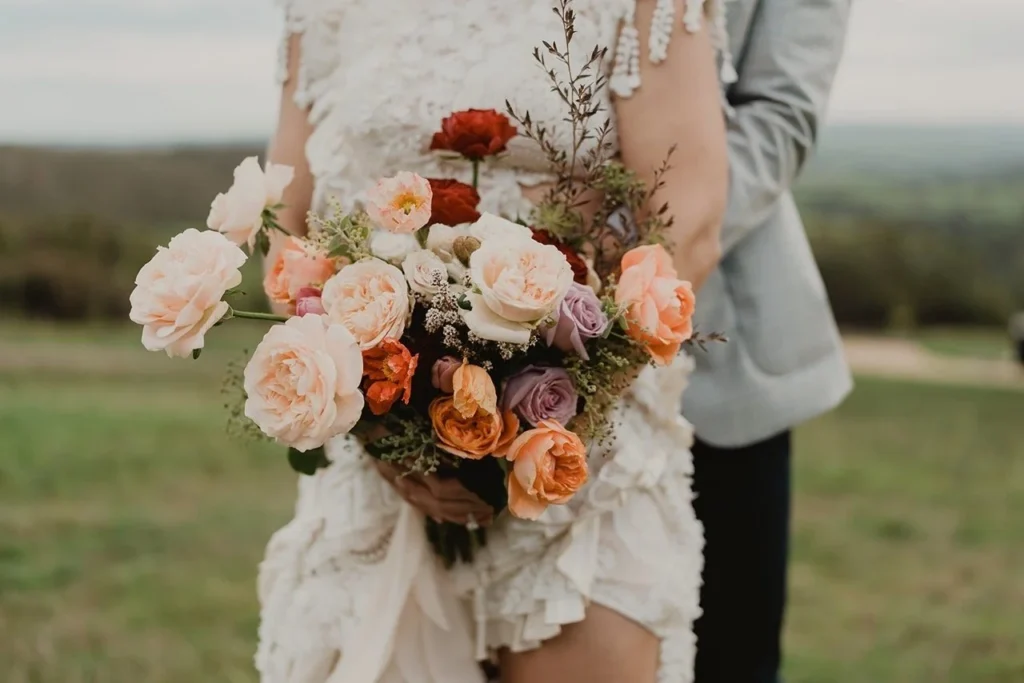
Australian natives worth building a wedding around
Natives are our genuine floral advantage. They are grown here, they handle heat and wind, they last far longer than imported stems, and nothing else looks like them.
- Waratah. The NSW floral emblem. Enormous, crimson, unforgettable. Roughly September to November.
- Banksia. Sculptural cylinders in yellow, orange and rust. Available much of the year and lasts for weeks.
- King protea. Technically South African but grown here extensively. A single stem can carry a bouquet.
- Kangaroo paw. Velvety tubular flowers in red, green, yellow and pink. Excellent texture.
- Flannel flower. Soft white daisy-like blooms with grey-green foliage. Delicate and very Australian.
- Geraldton wax. Tiny waxy flowers on woody stems. The best native filler available.
- Eucalyptus. Dozens of varieties, superb foliage, subtle scent. The backbone of modern Australian floristry.
- Wattle. Golden and fragrant in late winter, though it drops pollen and fades fast.
- Thryptomene, riceflower and boronia. Fine-textured natives that soften any arrangement.
Regional differences across the country
Sydney and coastal NSW. Mild, humid, windy near the harbour. Excellent year-round availability. Heat matters from November to March.
Melbourne. Cooler, with a longer window for peonies, hellebore and spring bulbs, plus genuinely unpredictable weather.
Brisbane and tropical Queensland. Heat and humidity dominate. Tropicals, orchids and natives outperform temperate imports.
Perth. Hot dry summers. Natives and proteas are outstanding, and WA wildflower season is spectacular.
Adelaide. Strong local growing, dry heat, excellent roses.
Tasmania. The peony and tulip capital. Cool climate flowers thrive, and the season runs later than the mainland.
Inland and regional. Extremes at both ends, plus longer transport times. Local growers and hardy varieties become essential.
Climate challenges and how to design around them
Heat. Deliver late rather than early, keep everything in water and shade, avoid fully open hydrangea and peonies, and choose roses, natives, lisianthus and orchids instead.
Wind. Coastal and harbourside ceremonies need low, weighted arrangements. Skip suspended hoops outdoors.
Humidity. Northern climates soften delicate petals fast. Tropicals and natives cope better.
Bushfire and smoke season. A real planning factor in some regions. Have an indoor contingency.
Drought and water restrictions. These affect local growers and can shift availability at short notice. Stay flexible on variety.
Imported versus locally grown
Some roses, orchids and specialty stems are imported, and they arrive under strict biosecurity control with treatment and inspection requirements. Locally grown material skips all of that, which means less time in transit and more vase life remaining.
It also supports the growers and the pollination systems that make Australian floriculture possible. That system is under genuine pressure, which is why work like the ANU project on domesticating Australian native bees as alternative pollinators matters: it responds directly to risks facing managed honeybee populations and the horticulture that depends on them.
Choosing seasonal Australian stems for your wedding is a small vote in that direction, and it produces better flowers anyway.
The legal and administrative layer
Wedding flowers Australia planning runs alongside a legal process with its own fixed timeline. In NSW, celebrants work within a formal registration framework, and the state publishes guidance for marriage celebrants covering registration, certificates and notice requirements.
The practical link to flowers is the Notice of Intended Marriage, which must be lodged at least one month before the ceremony. That sets your true minimum planning window, and floral booking should sit well inside it.
Cost expectations nationally
- Minimal: $1,200 to $2,200
- Standard: $2,500 to $5,000
- Elevated: $5,000 to $9,000
- Full floral design: $9,000 and up
Sydney and Melbourne sit at the higher end. Regional areas are often cheaper for labour but can cost more for stem transport.
A distinctly Australian approach
The best weddings here stop imitating European florals and lean into what this country does uniquely well: natives, eucalyptus, dry textures, strong sunlight, and an outdoor setting that needs less decoration than you think.
A waratah bouquet in spring. Banksia and eucalyptus for a windy harbour ceremony. Dahlias and garden roses in autumn. Grasses and dried textures for a summer beach wedding.
That is wedding flowers Australia at its best: seasonal, local, robust, and impossible to mistake for anywhere else.
